



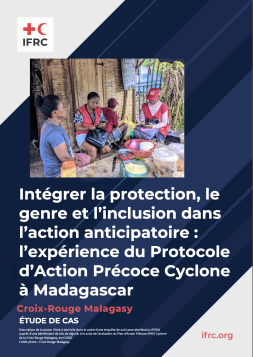
Madagascar is among the countries most exposed to climate-related risks in the Indian Ocean region. To reduce humanitarian impacts before cyclones strike, the Malagasy Red Cross has developed a Cyclone Early Action Protocol (EAP), enabling the activation of anticipatory actions based on predefined weather forecasts.
This case study highlights the integration of Protection, Gender and Inclusion (PGI) during the activation of the Cyclone EAP in anticipation of Tropical Cyclone Gezani in February 2026. It demonstrates how considerations related to protection, gender, inclusion, dignity and accountability can strengthen the accessibility, relevance and quality of anticipatory action mechanisms for populations most at risk.
This case study explores:
- The integration of PGI into anticipatory action before a cyclone makes landfall;
- Community-based approaches used to support early warning dissemination and preventive evacuations;
- Measures taken to promote dignity, inclusion and accessibility;
- Key lessons learned to strengthen future anticipatory action mechanisms.
Download the case study, "Integrating Protection, Gender and Inclusion into Anticipatory Action: The Experience of the Cyclone Early Action Protocol in Madagascar", to learn more about the key achievements, challenges and lessons learned from the experience of the Malagasy Red Cross.